
Types of Barcodes
A comprehensive guide to global barcode standards, their specifications, and their specific industry applications.
EAN-13
- Also known as: GTIN-13, Retail Barcode, European Article Number
- Encodable digits: 0-9
- Length: 13 digits
- Purpose: Identifying unique retail products at the point of sale
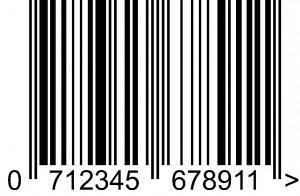
European Article Numbers (EAN barcodes) comprise 13 digits. They are used worldwide on all retail products except books and magazines. They are the most widely used barcodes globally, except in the USA and Canada, where UPC-A barcodes are more common. In India and most of the world, the EAN-13 is the barcode you need to stock your products at a retail store.
Each EAN-13 is product-specific and encoded into a barcode image. When the barcode is scanned into store systems, price and inventory data related to your product is recorded by the retailer. A different EAN-13 number is required for each unique product variation.
UPC-A
- Also known as: Universal Product Code, Retail Barcode, GTIN-12
- Encodable digits: 0-9
- Length: 12 digits
- Purpose: Identifying unique retail products at the point of sale
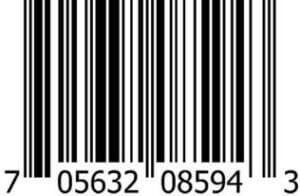
12-digit UPC Barcodes are used predominantly in the USA and Canada on all retail products, except for books and magazines. UPC barcodes predate EAN-13 codes and started appearing in US stores in the 1970s.
If you are primarily selling your products in the US or Canadian markets, you will likely want to use a UPC-A code rather than an EAN-13 code.
EAN-8
- Also known as: European Article Number 8
- Encodable digits: 0-9
- Length: 8 digits
- Purpose: Used for small products that cannot fit an EAN-13

A smaller, globally unique barcode intended exclusively for VERY SMALL products. Because EAN-8 barcodes are only 8 digits long, there is a severely limited global supply. Consequently, the GS1 organisation guards them carefully.
To obtain an EAN-8, you cannot simply buy one. You must submit physical proof to GS1 that your product packaging is too small for a standard barcode and wait for their official approval.
ITF-14
- Also known as: TUN, Carton Code, GTIN-14
- Encodable digits: 0-9
- Length: 14 digits
- Purpose: Carton code used by retailers to streamline inwards goods

ITF-14 Carton Codes are mathematically generated from your existing EAN-13 or UPC-A retail barcodes.
They are only used in warehouses on the outer shipping cartons containing a specific quantity of your product. These codes are NEVER used on products that are sold individually at a retail checkout. For example, if you ship a box containing 12 individual bottles of wine to a supermarket, the outer box gets the ITF-14 code, and each individual bottle inside gets an EAN-13 code.
ISBN
- Also known as: Book Barcode, International Standard Book Number
- Encodable digits: 0-9
- Length: 13 digits
- Purpose: For selling books at the retail level

International Standard Book Numbers (ISBN) are unique numbers assigned specifically to books. ISBNs always start with 978 or 979 and are distributed by the designated ISBN agency in each country.
ISBN Barcode images are generated based on that specific ISBN number. Because every book format (hardcover, paperback, etc.) requires a unique ISBN, no two ISBN barcodes are exactly the same, allowing bookstores to easily track inventory.
ISSN
- Also known as: International Standard Serial Number, Magazine Barcode
- Encodable digits: 0-9
- Length: 13 digits plus a 2 or 5-digit supplement
- Purpose: For magazines and serials sold at retail checkouts

Magazine barcodes are called ISSN barcodes. They are based on a unique 8-digit ISSN number that each magazine or periodical is officially assigned.
If you intend to publish a magazine, you must obtain an ISSN number from the ISSN International Center. Once you have that number, a barcode company can convert it into a 13-digit retail barcode, often adding a 2-digit supplement at the end to track specific issue numbers.
Code 39
- Also known as: Alpha 39, USD-3, Type-39, Code 3-9
- Encodable digits: Alphanumeric characters plus special symbols
- Length: Variable
- Purpose: Asset labels, name badges, internal closed systems

Code 39 barcodes are used for internal unique numbering. This makes them appropriate for asset labelling, membership cards, library books, or any other internal item that needs to be tracked. Nobody regulates the uniqueness of these barcodes (unlike retail barcodes), so they cannot be used outside of your own closed system.
Code 39 barcodes have a low data density, meaning each character takes up many bars and spaces. Therefore, they are not suited to encoding very long strings of characters.
Code 128
- Encodable digits: All 128 ASCII characters
- Length: Variable
- Purpose: High-density internal closed systems

Code 128 barcodes are very similar to Code 39 in that they are completely unregulated codes suited for internal use.
The primary difference is that Code 128 has a much higher data density (more characters can be encoded in a smaller physical space) and can contain any ASCII character, rather than just alphanumerics and basic symbols.
Code 11
- Also known as: USD-8
- Encodable digits: 0-9 and – (dash)
- Length: Variable
- Purpose: Primarily used in telecommunications

Code 11 barcodes are relatively simple, with a limited range of encodable digits. They are high density, which means each character does not take up much physical space on a label.
Telecom companies most often use Code 11 barcodes to identify complex equipment and track other important business assets.
Code 93
- Also known as: USS Code 93, USS 93, Code 9/3
- Encodable digits: Alphanumeric characters plus special symbols
- Length: Variable
- Purpose: Internal tracking

The Code 93 barcode is essentially an updated version of Code 39. It features more efficient encoding, more reliable scanning, and a greater variety of characters. The uses are identical to Code 39, though organizations like Canada Post heavily rely on Code 93 for internal routing.
GS1-128
- Also known as: UCC-128, EAN-128
- Encodable digits: Numeric characters
- Length: Variable
- Purpose: Encoding complex data about a product shipment

The GS1-128 is a highly regulated subset of the Code 128 barcode. However, these specific GS1 barcodes include only numbers.
They are incredibly powerful for logistics, as they can encode various critical product details into a single scan, such as the exact expiry date, packaging date, batch number, and net weight of a shipment.
SSCC
- Also known as: Serial Shipping Container Code
- Encodable digits: Numeric
- Length: 18 digits
- Purpose: Used on tertiary shipping (pallets) to track logistics

Serial Shipping Container Codes (SSCC) are highly specific shipping codes that communicate which company a massive container, pallet, or outer logistics carton has come from.
These are very different from ITF-14 container codes. An SSCC covers a mixed shipment with several different products inside it. These codes iterate by one for each order, allowing a massive retailer's inwards goods department to know exactly what mixed pallet they are receiving.
Codabar
- Also known as: Codeabar, Ames Code, Code 2 of 7, Monarch, USD-4
- Encodable digits: Numeric digits and special symbols
- Length: Variable
- Purpose: Highly durable asset tracking

The Codabar is a somewhat outdated barcode still found in legacy internal inventory systems, particularly in libraries and blood banks. These specific codes are designed to scan reliably even when printed on very low-quality paper or created with mechanical equipment like a typewriter.
QR Code
- Also known as: Quick Response Code, Matrix Barcode
- Encodable digits: Alphanumeric and symbols
- Length: Variable (More data creates a more dense pixel pattern)
- Purpose: Encoding complex data or URLs for smartphone scanning

QR Codes have become an essential feature of modern marketing, advertising, and retail. They bridge the gap between physical objects and digital information.
These 2D barcodes can store vastly more data than traditional 1D linear codes and are specifically designed to be easily read by any standard consumer smartphone camera.
Legal & Verified GTINs
Genuine, never-used EAN and UPC barcodes without annual renewal fees.
Instant Automated Delivery
Delivered instantly via email in high-quality PNG, PDF, and SVG formats.
Standard Technology
Prepared for modern retail scanning and 2D Digital Links.
Local Support, Global Power
Dedicated Indian support backed by the International Barcodes Network.